Elephants in the Fog: A Decent Film That Left Me Thinking
I went into Elephants in the Fog expecting something extraordinary after hearing about its Cannes reception. What I found was a thoughtful and visually striking Nepali film that I appreciated, even though its ending left me more confused than satisfied.
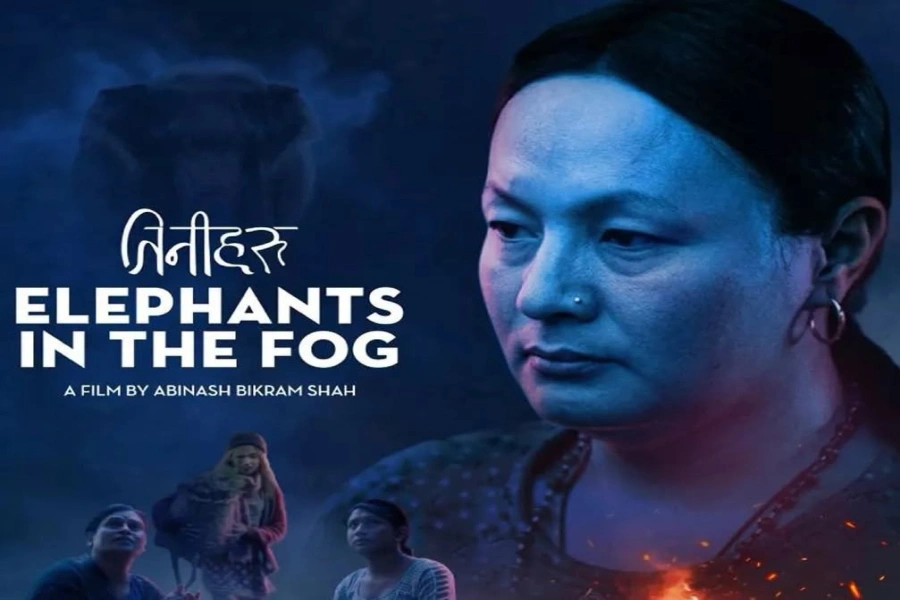
I probably would not have watched Elephants in the Fog if my friend had not called me that morning and asked if I was going to watch it with the others.
I had not even watched the trailer. I had only seen some discussion about the movie on Instagram reels, YouTube Shorts, and elsewhere. Then I heard that the film had received a long standing ovation at Cannes and had won the Jury Prize in the Un Certain Regard section. Naturally, that raised my expectations.
I am someone who watches a lot of movies. I have probably watched more than 200 films by now, and cinema, filmmaking, and television are some of my favorite ways to spend my time. So when a Nepali film receives this kind of international appreciation, especially at Cannes, I naturally become curious about what makes it so special.
But I will be honest: when I finally sat in the theatre and understood what kind of story I was about to watch, I was not completely sure what to expect. I had never really gone into a Kinnar-centered film before, and part of me wondered what this movie would offer that would make me sit through the entire film.
By the time the credits rolled, my reaction was somewhere between appreciation and confusion.
My rating: 7.5/10
Not a masterpiece for me, but definitely a film worth thinking about after leaving the theatre.
The Story
Elephants in the Fog, also known by its Nepali title Tiniharu, takes place in a village in southern Nepal, near a forest inhabited by wild elephants. At the center of the story is Pirati, the matriarch of a Kinnar community.
Pirati has an important position within her community. The Kinnar women live together as a chosen family and are also respected by villagers for performing blessings and rituals during occasions such as marriages and pregnancies.
At the same time, their acceptance is complicated. They can be respected in one situation and treated very differently when they challenge the expectations placed upon them.
Pirati herself is caught between those expectations and her own desires. She is expected to uphold the rules of her community, including its restrictions on relationships, while she has developed a relationship with Master, a musician from the village.
Things become more complicated when Pirati's adopted daughter, Apsara, begins challenging those same expectations. Apsara wants her own life and has a relationship of her own, creating conflict between mother and daughter.
Their argument eventually becomes physical. Pirati pushes Apsara, and Apsara leaves the house.
At first, Pirati does not seem immediately overwhelmed by her daughter's disappearance. But when Apsara does not return, concern slowly turns into desperation. Pirati begins searching for her.
When the Community Turns Against Pirati
The search leads Pirati toward MJ, a rickshaw driver who had been in contact with Apsara. When Pirati confronts him and involves the police, the situation becomes even more difficult for her.
Instead of receiving the support she might expect, Pirati finds herself increasingly isolated. The villagers who previously accepted her presence begin turning against her.
This was one of the parts of the film that stood out to me.
Pirati had been useful to the community. She gave blessings, participated in ceremonies, and occupied a respected position. But when she became inconvenient, that respect suddenly became conditional.
The film seems interested in that contradiction: how a community can simultaneously revere, fear, depend upon, and exclude the same people.
The villagers' attitude toward Pirati changes dramatically once she begins challenging the boundaries they are comfortable with. Her status gives her a certain kind of respect, but it does not necessarily give her genuine acceptance.
Spoilers Ahead: The Part That Really Changed Pirati
Spoiler warning: From this point onward, I am discussing the major events and ending of the movie.
During her search, Pirati discovers that a body has been found. She suspects that it could be connected to Apsara and goes to see the body, but she is prevented from entering because she is not considered a blood relative.
That moment leads her somewhere even more important: Apsara's biological family.
Pirati goes to Apsara's original home and asks her biological mother to help her confirm whether the person she is searching for is actually Apsara.
And then comes one of the most important moments in the film.
Pirati sees Apsara alive, dressed as a man, at her biological home. Whatever questions I had about the story at that point became less important than what the scene represented.
Pirati, who had previously been enforcing the rules of her community on Apsara, now desperately wants her daughter back. She apologizes and pleads for help, but she is separated from Apsara by her biological family.
This is where Pirati's character changes for me.
Earlier in the film, she seemed deeply tied to the rules of her community. She wanted to be respected, wanted to maintain her position, and even wanted to leave with Master. But after Apsara disappears, the priorities change.
She stops behaving like someone simply trying to preserve her position and starts behaving like a mother desperately trying to find her child.
Can Someone Become a Mother Without Being a Biological Mother?
This may actually be one of the ideas I found most interesting in the film.
Pirati is not Apsara's biological mother. Their relationship exists through the chosen family that the Kinnar community has created. Yet when Apsara disappears, Pirati's attachment to her becomes stronger than the rules she had previously defended.
The movie seems to suggest that motherhood is not necessarily defined only by biology. It can also be created through responsibility, care, attachment, and the bond between two people.
I would not say the movie gives a simple answer to this idea, but Pirati's transformation certainly made me think about it.
The Villagers and Their Changing Attitude
Another part I found interesting was the way the villagers treated the Kinnar community.
At the beginning, Pirati and the other Kinnar women are part of village life. They are invited to ceremonies and their blessings are considered meaningful. There is a certain reverence surrounding them.
But when Pirati becomes a problem, that attitude changes.
The same people who could show respect toward the Kinnar community during ceremonies can turn hostile when the community no longer fits the role they expect it to play.
The film seems to use this contrast to question whether the acceptance shown by society is genuine or simply conditional.
In that sense, the Kinnar community is not simply shown as being outside society. They are already part of the village. They participate in its traditions and relationships. Yet there is still a line that the wider community does not seem willing to let them cross.
And Then There Are the Elephants
The elephants are not just there to create danger or atmosphere.
Throughout the movie, the villagers fear the elephants living around the forest. They organize patrols and take precautions because the animals can enter the village and cause serious damage.
What I found interesting is the parallel the film creates between the elephants and the Kinnar community. Both exist on the edge of the village. Both are treated as something different. And both seem to occupy a strange space between fear, respect, and distance.
The title itself, Elephants in the Fog, feels appropriate because so much of the film operates in uncertainty. We do not always know exactly what is happening, what is real, or what a particular image is supposed to represent.
The Ending: I Am Still Not Completely Sure
This is probably the biggest weakness for me, although it might also be intentional.
After Pirati returns from Apsara's biological home, the house she had been living in is burning. She searches for the other members of her community, and eventually we reach the strange and almost dreamlike final sequence.
Pirati is in the forest, clapping. Then other clapping seems to emerge around her. The Kinnar women appear, and eventually the elephants enter the scene.
I understood the emotional meaning of the scene more than the literal meaning.
To me, it felt as though Pirati was no longer simply standing as one individual woman. She was carrying the grief, anger, and suffering of the people around her. The elephants appearing alongside the community made the ending feel almost mythological, as if the film had moved from a grounded mystery into something symbolic.
But I would be lying if I said I completely understood what the director wanted me to take from it.
Maybe the elephants represent the power of something that society cannot completely control. Maybe they connect the Kinnar community with the forest and the idea of being pushed to the margins. Or maybe the final sequence is deliberately open enough for every viewer to interpret it differently.
I actually think the final sequence works better as an image than as a straightforward conclusion. It is memorable, but I personally wanted a little more clarity before the credits rolled.
The Interval Felt Slightly Odd
One smaller complaint I had was the interval.
I did not feel that the particular point where the movie stopped was especially natural. It felt more like a practical break for the audience than a break that came at a strong dramatic point.
Moving it slightly earlier or later might have made the first and second halves feel more naturally divided.
This is obviously a small criticism, but when watching a film in a theatre, pacing matters beyond the story itself.
What I Thought of Abinash Bikram Shah
After watching the movie, I became curious about the director because I realized this was not simply a filmmaker appearing out of nowhere.
Abinash Bikram Shah is a Nepali writer and director who has already built an international festival career. Before Elephants in the Fog, he directed the short films I Am Happy, Tattini: The Moon Is Bright Tonight, and Lori.
Lori was selected for the Cannes short-film competition in 2022 and received a Special Jury Mention.
Shah has also worked as a writer on several notable Nepali films, including Highway, Kalo Pothi: The Black Hen, and Shambhala.
So after learning more about his previous work, the Cannes recognition for Elephants in the Fog made more sense to me. This is a filmmaker who has been working toward this kind of cinema for years.
So, Was It Worth Watching?
For me, yes.
But not because I came out thinking I had just watched the greatest Nepali movie ever made.
My expectations were probably too high before the movie even started. Hearing about Cannes, the standing ovation, and the Jury Prize made me expect something extraordinary. And because I watch a lot of movies, especially Hollywood and Bollywood films, I probably approached it with a different set of expectations than someone who primarily watches festival cinema.
Elephants in the Fog is slower, quieter, and much more metaphorical than the kind of mainstream movie I usually reach for. Some of its ideas worked for me immediately. Others went over my head.
The story of Pirati and Apsara stayed with me, particularly the change in Pirati from someone trying to enforce the rules of her community to someone willing to fight against almost everything around her to find her daughter.
I also liked the way the film made me question the difference between being respected and actually being accepted.
At the same time, I found parts of the movie and especially the final sequence difficult to understand. Maybe that ambiguity is exactly what the filmmakers intended. Maybe I simply missed some of the symbolism. Either way, I left the theatre thinking about the movie rather than completely understanding it.
Final Thoughts
I would give Elephants in the Fog around 7.5/10.
The first point of that score is simply that it is a well-made and ambitious Nepali film with a story that is clearly trying to say something beyond its immediate plot.
The second is that my expectations were probably too high before I even entered the theatre. The Cannes reception made me expect a masterpiece, and the movie did not quite reach that level for me.
The third is the ending. I liked the imagery, the atmosphere, and the symbolism, but I did not completely understand what I was supposed to take from the final sequence.
Still, I think there is something valuable about a movie that makes you leave the theatre and continue thinking about it.
Elephants in the Fog did exactly that for me.
I may not have understood everything, and I may not be the biggest appreciator of this particular style of cinema, but I can still say that it was a pretty decent film—and an interesting one to experience in a Nepali theatre.